

Welcome to Episode 35 of the Preferred Shares Podcast.
This podcast is the second and final part on our series on the American Tobacco Company and the founding Duke family. Part One covered the founding of the family tobacco business, and then the unbelievable hardships the family endured and overcame during and after the Civil War to re-start the business.
We begin Part Two in 1890 with Buck Duke’s formation of the American Tobacco Company, which would become the dominant force in all the major forms of tobacco in the United States. We hope you enjoy.
The Antitrust Act and Market Dynamics
Antitrust Action Against American Tobacco Company
The Supreme Court’s Ruling on ATC
The Breakup of American Tobacco Company
Buck Duke’s Legacy and Diversification
The Impact of the Duke Endowment
Counterfactuals and the Future of Tobacco
Should We Celebrate Buck Duke?
Images, Tables and Charts
American Tobacco’s Losses on Plug Tobacco (1894-1898)
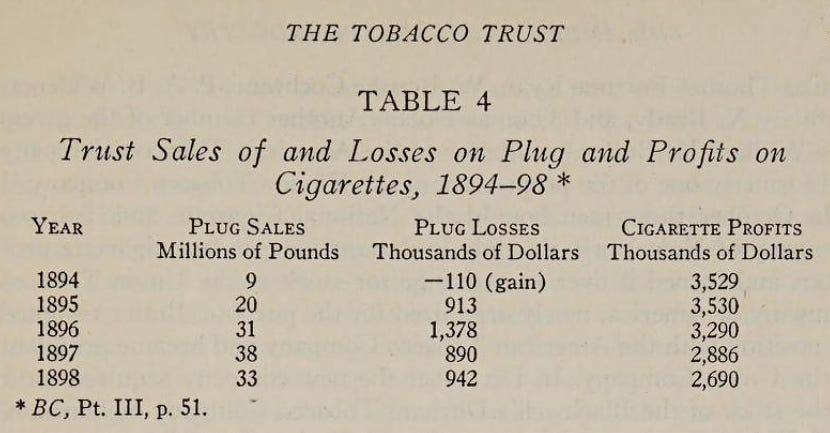
ATC lost a cumulative $4 million on plug tobacco from 1894-1898. Robust profits from its cigarette business supported these losses.
Billions of Cigarettes Sold in the U.S. (1890-1949)
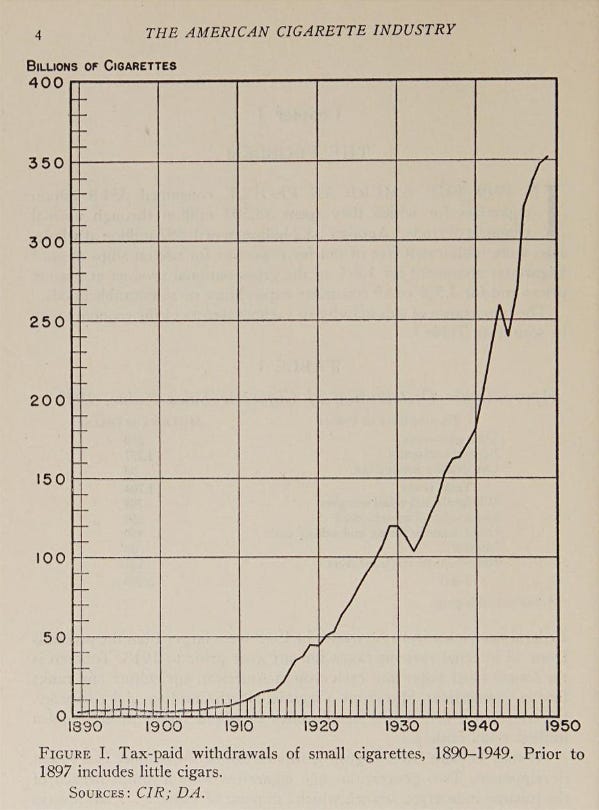
For a long time, cigarettes were insignificant compared to plug and chewing tobacco and cigars. However, with ATC’s unrelenting emphasis on scale and efficiency, the cigarette category grew rapidly. From 1910 to 1921, total industry cigarette volumes increased 5x. From 1910 to 1949, volumes increased 35x.
Per Capita Consumption in Pounds of Various Tobacco Products (1904-1953)
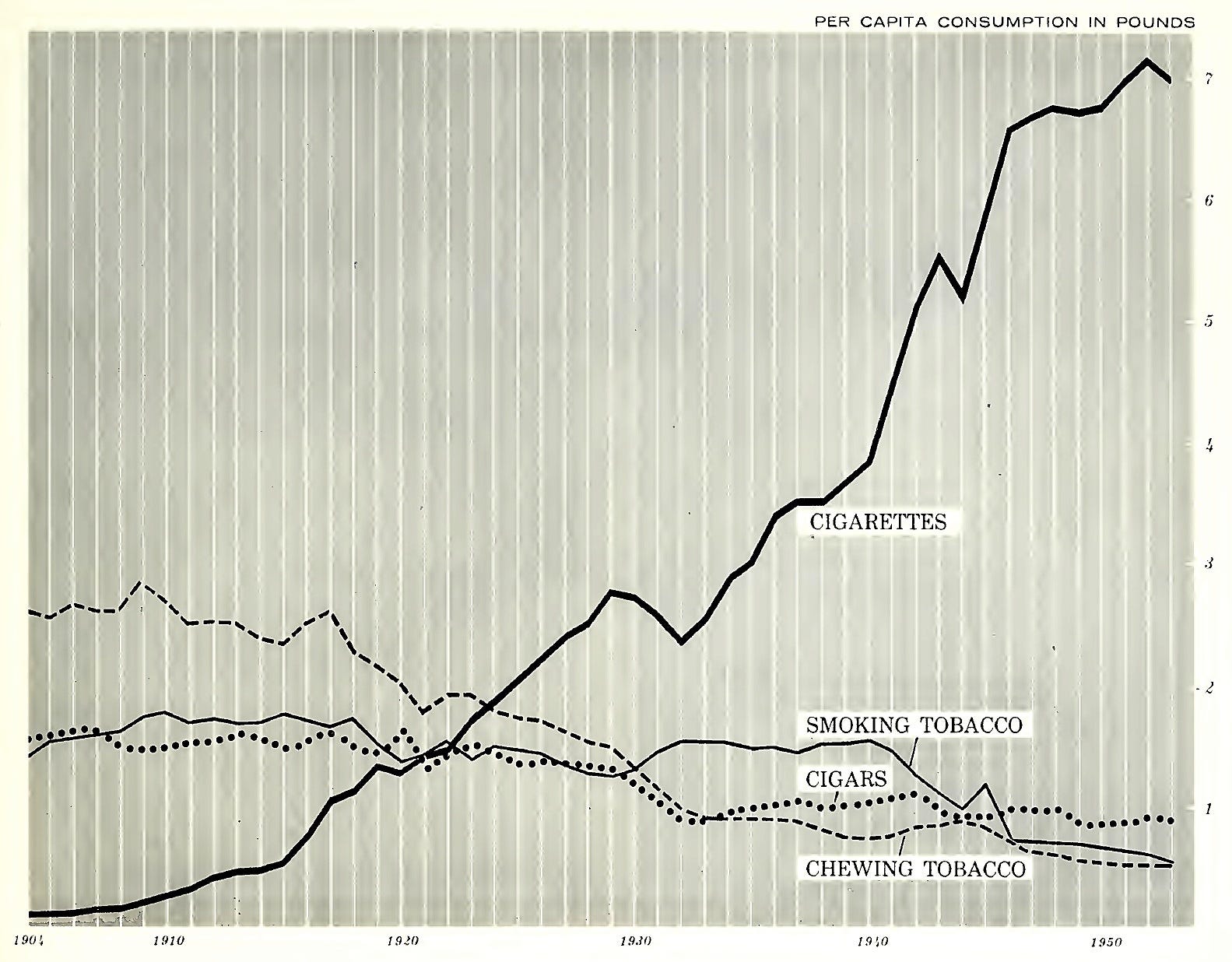
Cigarettes were a minor part of all tobacco products for several generations. It wasn’t until the 1920s that cigarettes overtook chewing tobacco, smoking tobacco, and cigars, on a per capita basis in the United States.
Profitability of American Tobacco Company (1890-1908)
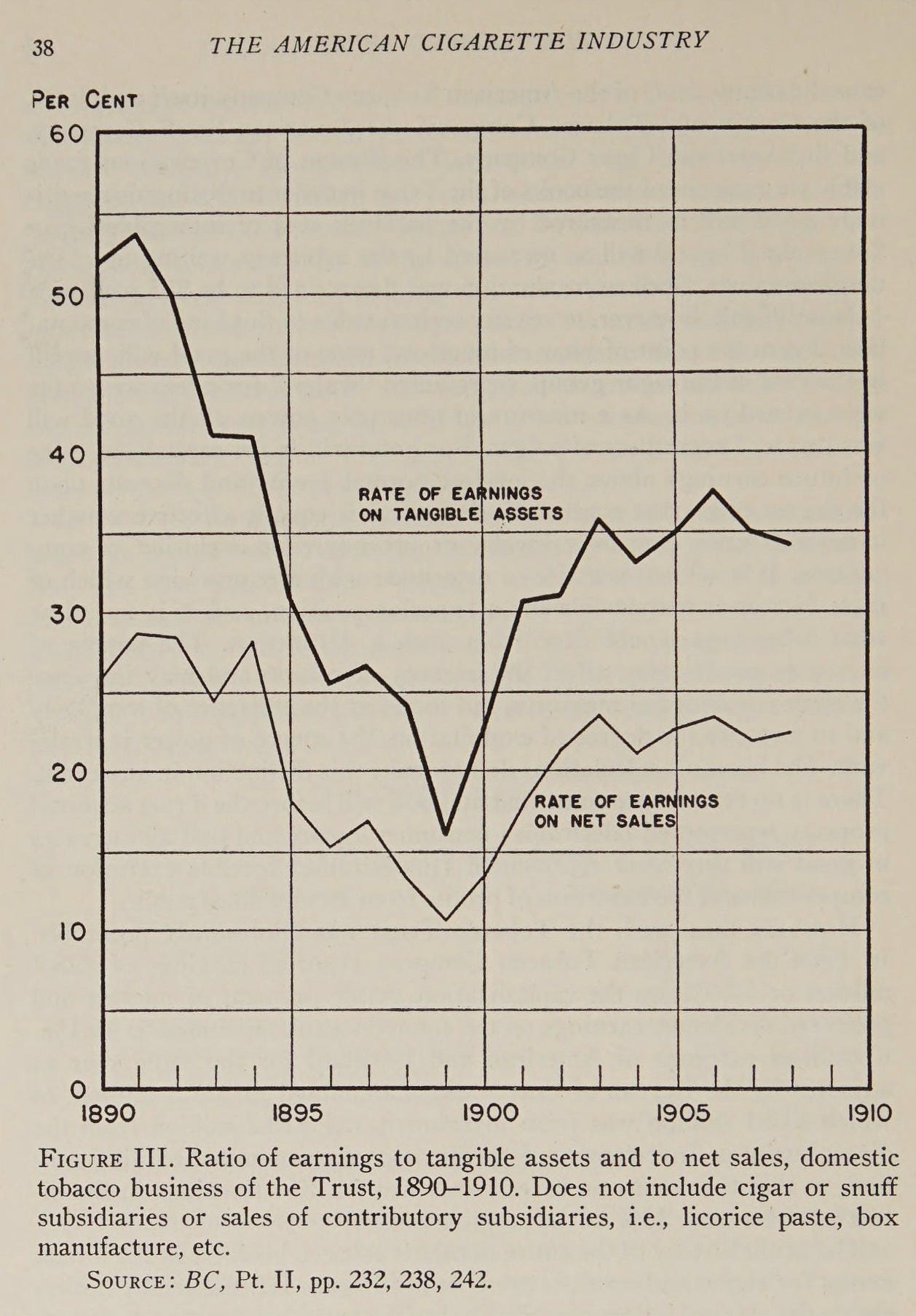
ATC was tremendously profitable at its inception. However, profitability declined from 1890 to 1909 for two reasons. The first is ATC’s battles during the plug tobacco war from 1894-1898. Second, profitability declined as ATC consolidated and invested in other less profitable tobacco categories. Despite the profitability decline during the 1890s, ATC still managed to earn an average of 32.7% on tangible assets and an average profit of 20.6% on net sales from 1890-1909.
Taxes and Dividends Paid by the American Tobacco Company (1904-1953)
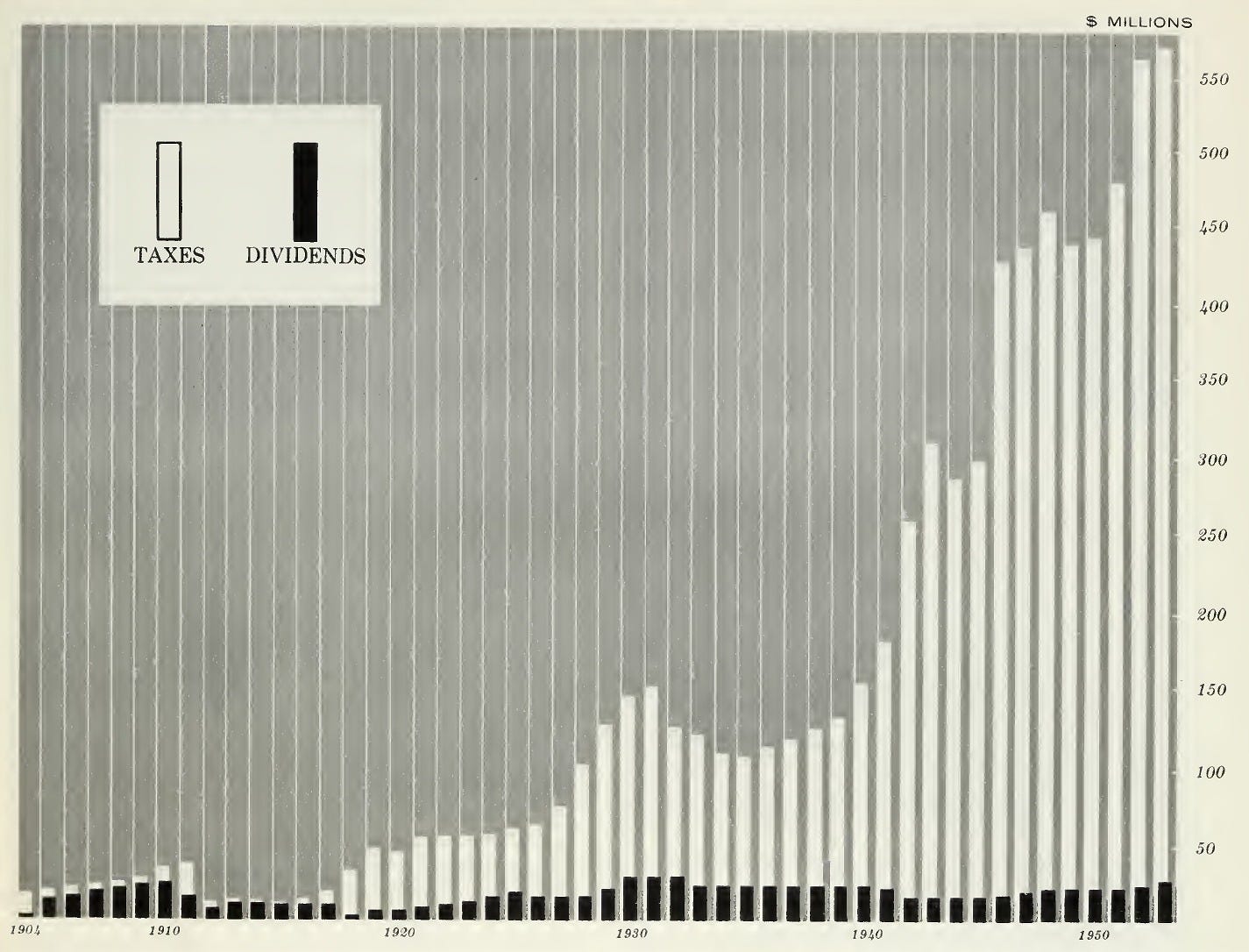
ATC paid a steadily growing amount of state and federal taxes. The dividends it paid to shareholders from 1910-1953 remained unchanged as it continually reinvested in its business.
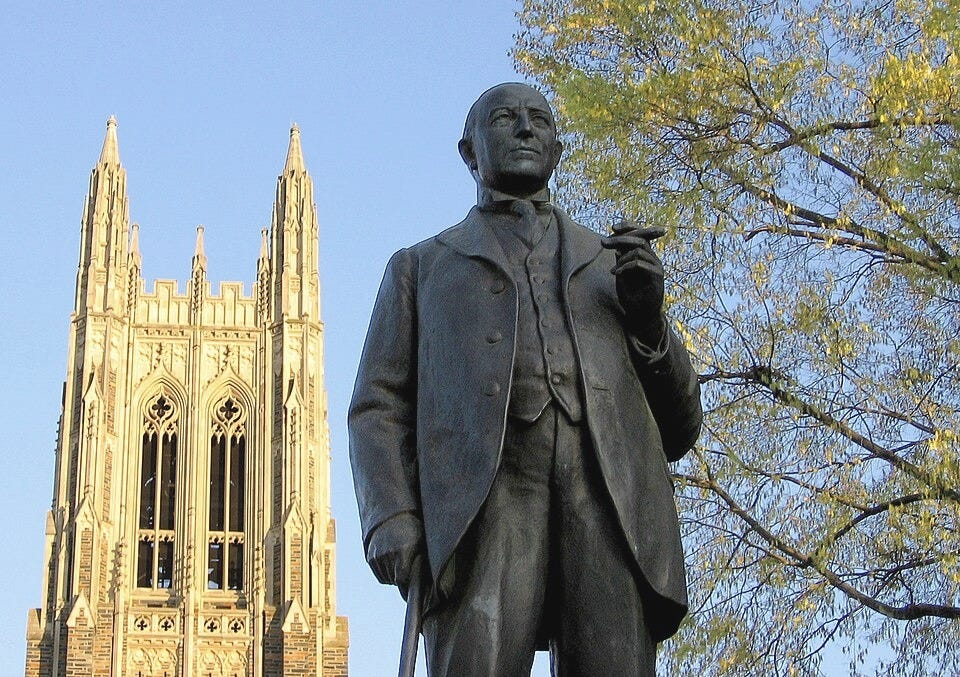
Statue of James Buchanan at Duke University
Sources
Books
Farley, Jennifer Dawn. Duke Homestead and the American Tobacco Company, Arcadia Publishing, August 26, 2013.
American Tobacco Company. Sold American!: The First 50 Years of the American Tobacco Company, 1954.
Tennant, Richard B. The American Cigarette Industry, 1950.
Jenkins, John Wilber. James B. Duke, Master Builder, 1927.
Other
Additional Reading & Listening
Curious to see what else we’ve been working on? Check out some of the interesting things we’ve done recently:
Devin LaSarre (Invariant and @DevinLaSarre)
Douglas Ott (Andvari Associates and @yesandnotyes)
📖 Ingredion: A Low-Multiple, High Value-Added Business Near Inflection
📖 Think! or Surrender!! - The Life and Wisdom of H. O. Hirt, co-founder of Erie Indemnity
Lawrence Hamtil (Fortune Financial and @lhamtil)
Enjoy this episode? Share it with someone who loves business history as much as you do!
You can also follow Preferred Shares, Devin, Doug, and Lawrence on Twitter.
Disclaimer
All opinions expressed by Preferred Shares hosts and guests are solely their own opinions and do not reflect the opinions of their respective employers. This podcast is for informational and entertainment purposes only and should not be relied upon as a basis for investment decisions. None of the information contained in the podcast or this web site constitutes a recommendation that any particular security, portfolio of securities, transaction, or investment strategy is suitable for any specific person.
Clients of Andvari and Fortune Financial may maintain positions in the securities discussed in this podcast. Furthermore, from time to time, the Hosts may hold positions or other interests in securities mentioned in the Podcast and may trade for their own accounts based on the information presented. The Hosts may also take positions inconsistent with the views expressed in its messages on the Podcast.


